












Do you know what one of our mottos is here at KitchenShop? When it comes to food, tastes are a matter of opinion, but they are never to be judged! Whether you love the beef steak - blue rare - or you prefer a steak, which is medium-rare cooked, or go for the controversial well-done, all we can say is: Enjoy your meal!
But how do you achieve the desired doneness if you're not a professional chef with years of experience? The solution is a precisely calibrated meat thermometer.
Of course, there are many different types of meat thermometers, available at various prices. In this article, we will explain which are the best thermometers to roast the meat and what internal temperatures the meat should reach to achieve the perfect result for your taste.
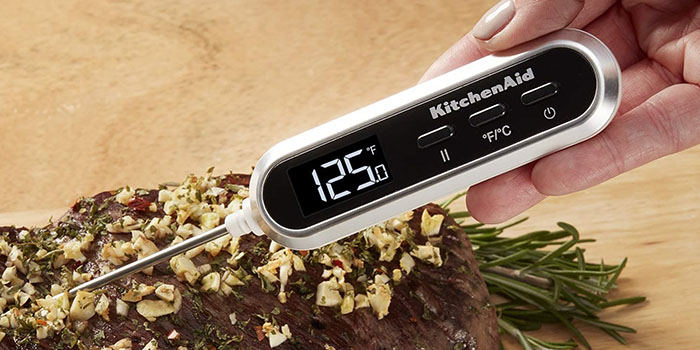
The importance of using a beef steak thermometer
A meat thermometer is not a fad, but a way to ensure you're serving a steak that is at the same time:
- Well cooked: has an internal temperature that is safe for consumption.
- Perfectly cooked: it stays tender and juicy, doesn't become hard and rubbery.
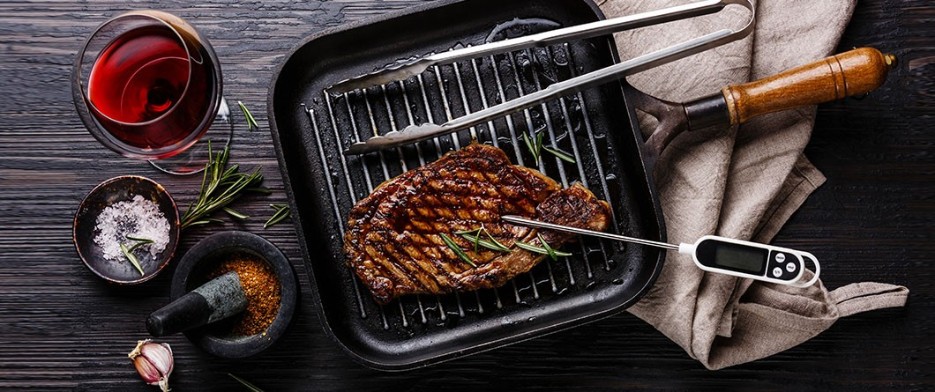
Whether you're roasting a beef ribeye in the oven or searing beef steak in a frying pan, it's extremely important to have a meat thermometer at hand, especially when cooking thick cuts of meat.
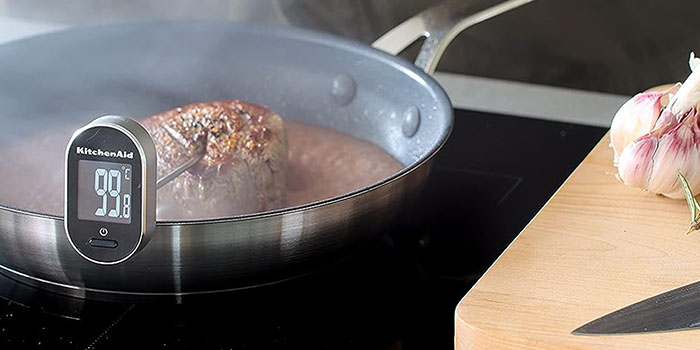
Types of meat thermometers
There are several types of beef steak thermometers, each with their own benefits and ideal use cases.
Digital thermometers
These thermometers provide a quick read of the internal temperature. They have a digital display and are inserted into the thickest part of the steak.
Digital thermometers accurately display temperature and are often provided with other useful features, such as an audible warning, quick reading in a few seconds, or automatic shut-off.
Digital thermometers fitted with a stainless steel probe are specially designed to measure the temperature inside the steak, without it losing its aromatic juices as would happen when cutting.
Specialist's recommendation:
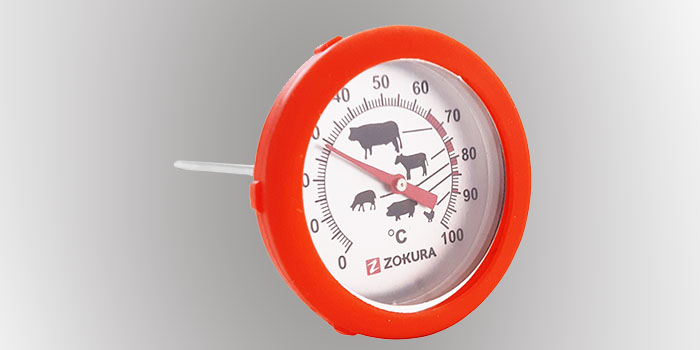
Analog thermometers
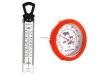
You can trust them, but you have to give them a little patience. Compared to digital models, analog thermometers take a little longer to display the temperature, but they are generally reliable, durable and do not require batteries.
To use an analog thermometer, insert the stainless steel probe into the meat and watch as the indicator needle gradually moves to display the internal temperature.
Specialist's recommendation:
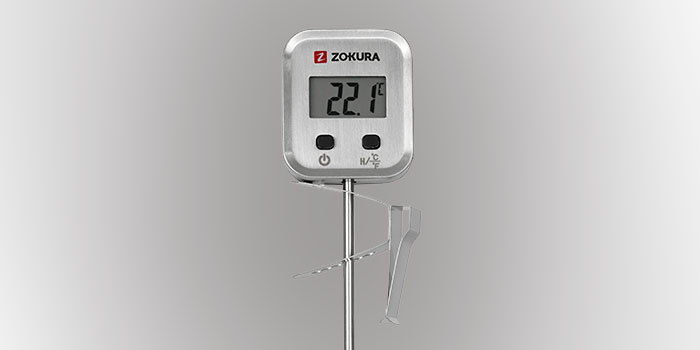
Instant-read thermometers
Instant-read thermometers can be digital or analog. They are ideal for checking the temperature of a pan-seared steak, but also of a roast beef in the oven.
Unlike regular thermometers, which require you to wait a few seconds, instant-read steak thermometers let you know right away, so you can quickly assess whether your steak has reached the desired level of doneness.
Specialist's recommendation:
How do you use a steak thermometer correctly?
- To measure the temperature of beef meat in the oven or in a frying pan, you need to make sure you insert the probe into the coldest part of the steak. The outside of a steak will likely be much hotter than the center, so it's essential to insert the metal rod of the thermometer all the way into the hot center of the steak, in the thickest part.
- If you're cooking a bone-in cut of beef, such as a T-bone or rib-eye, make sure the thermometer probe is placed further away from the bone. Otherwise, you risk the thermometer reading a false temperature, as bones conduct heat differently than muscle.
- Also, remember that the steak will continue to cook slightly after you remove it from the pan. It's ideal to remove it from the heat when the core of the steak reaches the lower limit of the temperature (see below for temperature limits for each type of steak).
- As with all kitchen utensils, clean or disinfect the thermometer thoroughly after each use. Follow the manufacturer's instructions for cleaning and maintenance.
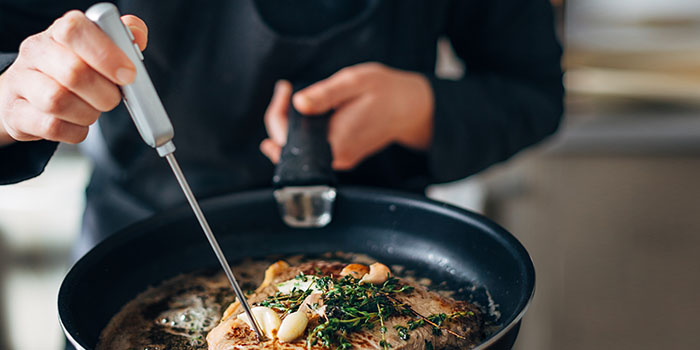
At what temperature is a perfect beef steak cooked?
In many culinary traditions, especially in steak-centric cultures like the US and Argentina, the steaks that are medium-rare or medium-well are often considered ideal. But that doesn't mean that other levels of doneness aren't preferred by many foodies. Here are the differences between them:
Rare
The rare steak develops a golden brown crust on the outside, but remains pink, tender, and juicy inside. While the outside is hot, the center of the steak will feel only warm on the tongue, so it remains almost raw.
Chefs and culinary experts often recommend steaks that are rare or medium rare, believing these offer the best balance between flavor and tenderness.
Internal temperature: 51-54°C
Medium rare
If you like your beef steak tender and juicy, you may prefer medium rare. In this case, the fibers of the steak contract, but the juices inside don't have time to fully come to the surface.
It is a popular choice among chefs and connoisseurs, often recommended in restaurants and steakhouses.
Internal temperature: 55-58°C
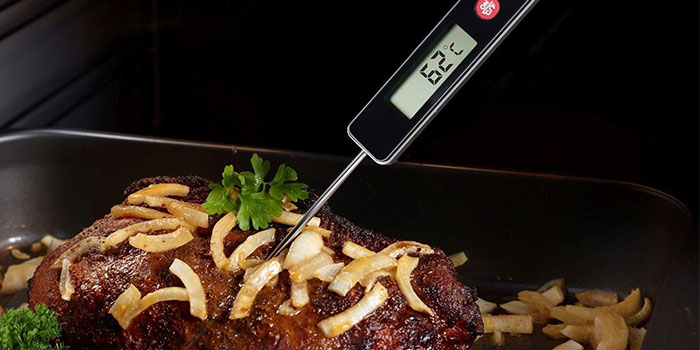
Medium
The center of the steak is hot all the way through. When you press your fingers on the steak, it will offer some resistance and spring back slightly. There is no longer any trace of the original red of the raw meat.
Internal temperature: 59-65°C
Medium well
A steak which is medium well, completely changes color and inside, is firm to the touch, but less juicy than other types of steak.
Internal temperature: 66-74°C
Well done
If you prefer your steak cooked all the way through, with no trace of pink, a well done steak is the way to go. A well done steak is cooked to the point where it loses most of its natural juices.
As a result, it tends to be firmer and less tender compared to steaks cooked in the rare way. Many people believe that this loss of tenderness and juiciness detracts from the overall experience of enjoying a steak.
Internal temperature: 75°C+
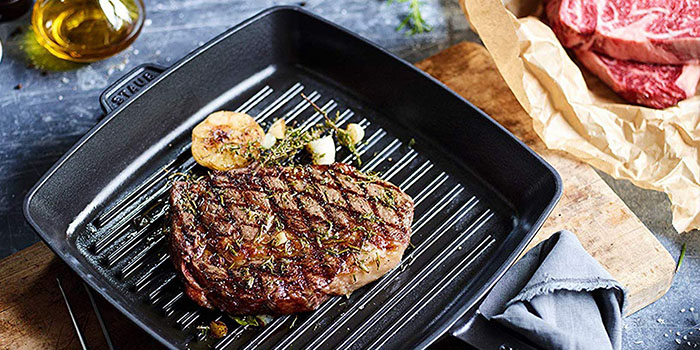
8 tips for getting a perfect beef steak
A perfect steak can be a matter of luck, but it rarely happens. To ensure excellent results every time, you need, as I said, a steak thermometer, a grill pan or a regular frying pan with a thick base, a little patience, and some basic cooking techniques.
Did I forget something? Oh yes, the most important factor: quality beef!
- Choose one of three cuts of beef (also called beef cuts) ideal for a delicious steak: ribeye, tenderloin or sirloin. These are ideal for both pan-fried steak and incredibly tender oven-roasted beef.
Learn more in our article: How to choose and cook beef steak. - Before cooking, leave the meat at room temperature for 20-30 minutes to achieve uniform results.
- A perfect steak that melts in your mouth is made with tender or prime beef. Under no circumstances should we try to tenderize the meat with a meat mallet. This is only used for schnitzels.
- Excellent beef meat has a great flavor and doesn't require a lot of seasoning or marinades. Season your beef steak with just salt and pepper before cooking.
If you still want to give it more personality, you can add 2-3 sprigs of fresh thyme or 1-2 cloves of garlic to the pan towards the end of the cooking time. - Pan-fry the beef steak in a mixture of butter and olive oil. The oil has a higher smoke point and prevents the butter from burning.
- For a perfectly cooked beef steak, brown the steak in a hot pan, then place it in the oven on a roasting pan. The very short searing in the pan guarantees a golden crust that "seals" the meat and prevents the juices from running out.
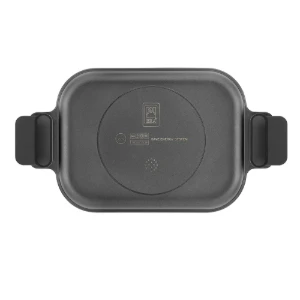
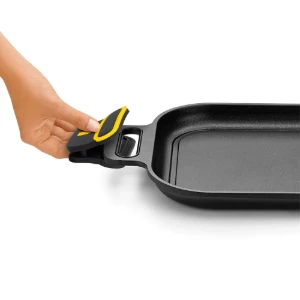
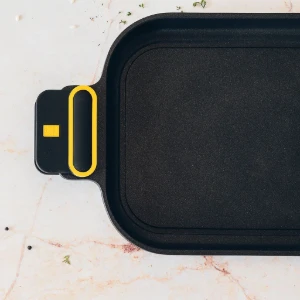
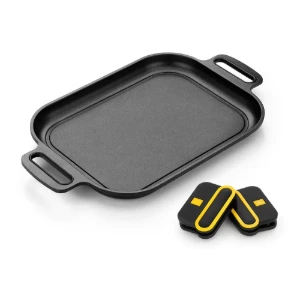
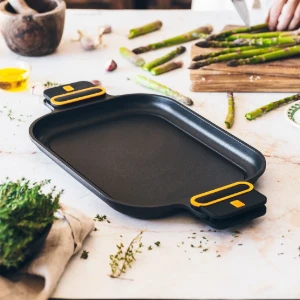
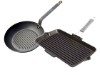
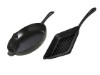
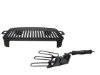
- If you don't want to move the beef steak from the pan to the baking tray, you can use a cast iron pan, which you put from the stovetop directly into the oven, like this square cast iron grill pan, 30 cm, Staub
- Once the steak is done, let it rest for 10-15 minutes. Don't cut into the steak right after you take it off the heat, as you risk all the juices running out and leaving you with a tough, disappointing steak.
Cooking the perfect steak is a challenge in any kitchen, and getting the temperature just right is an essential part of this delicious culinary story.
Whether you want to cook a juicy T-bone, or a tender filet mignon, or a flavorful beef tenderloin, let our tips above on using a meat thermometer guide you to get a terrific steak right in your own kitchen.
Other recommended products:
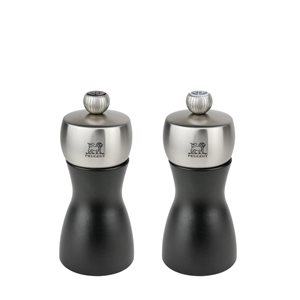
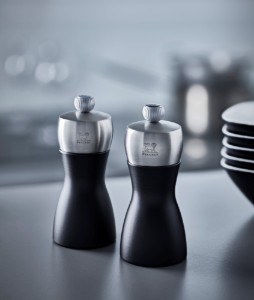
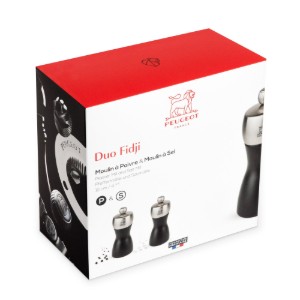
Set of 2 salt and pepper grinders, 12 cm, "Fidji", Black - Peugeot
Code: 221283
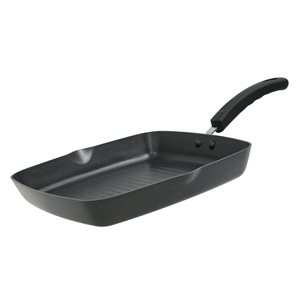
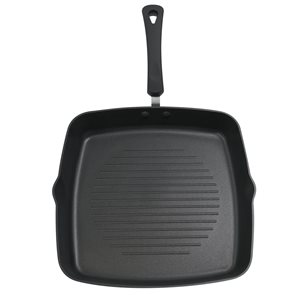
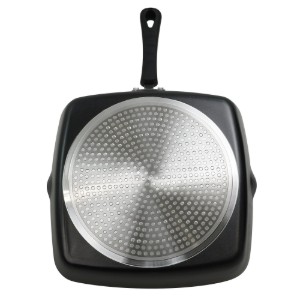
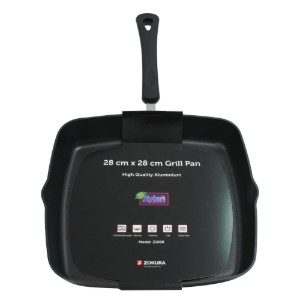
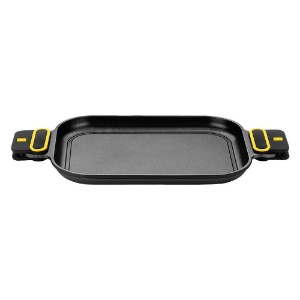
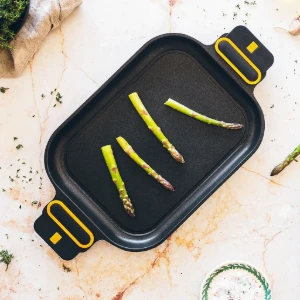
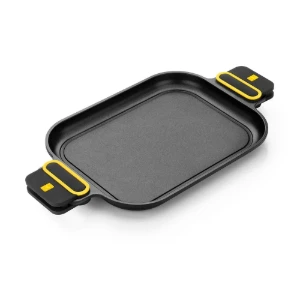
Square grill pan, aluminum, 28x28cm, "Primary" - Zokura
Code: Z1088
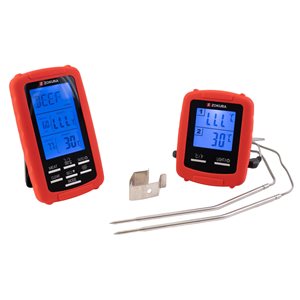
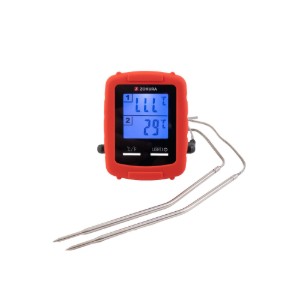
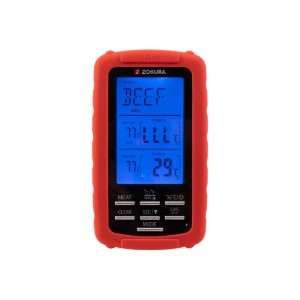
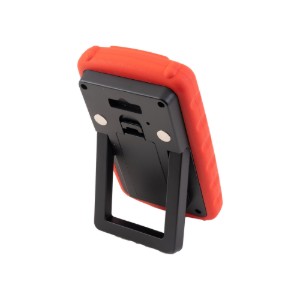
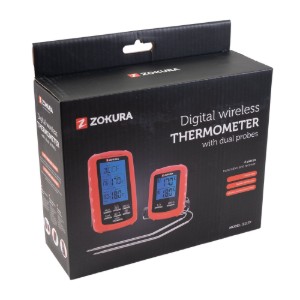
Wireless meat thermometer, with 2 probes - Zokura
Code: Z1177
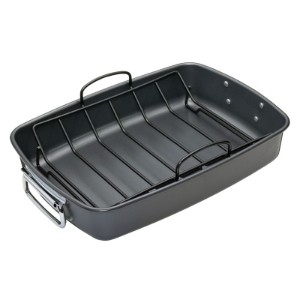
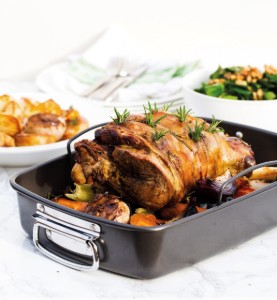
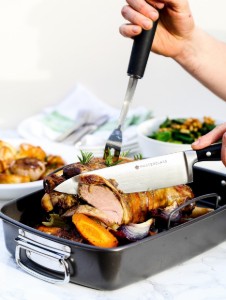
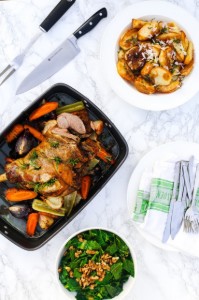
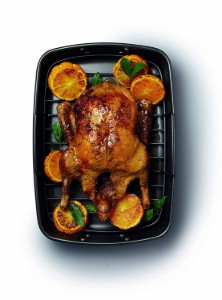
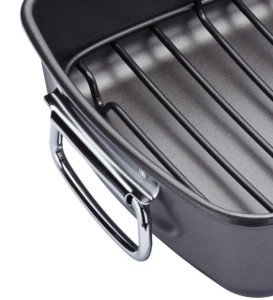

Steak roasting pan, steel, 40 x 28 cm - MasterClass
Code: KCMCHB52
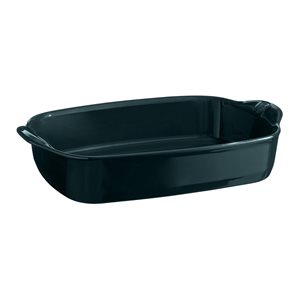
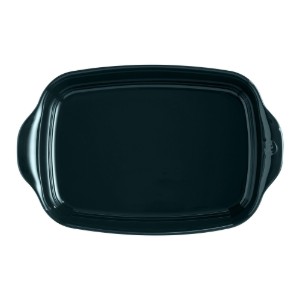
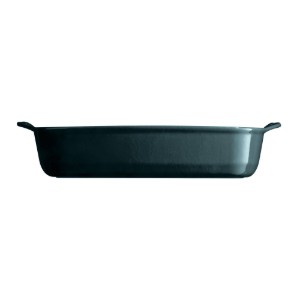
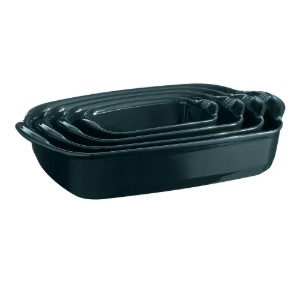
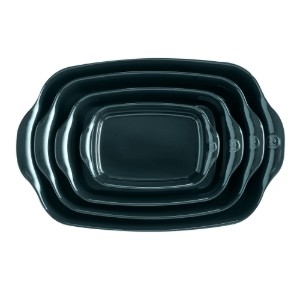
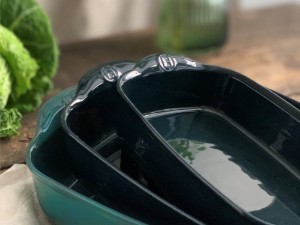
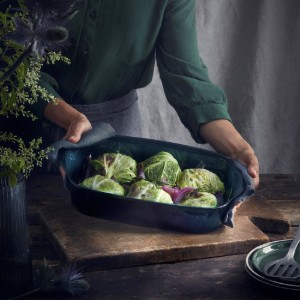

Ceramic oven dish, 36.5x23.5cm/2.7L, Belle-Ile - Emile Henry
Code: 965273
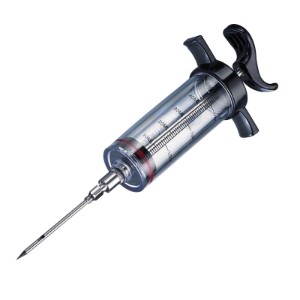
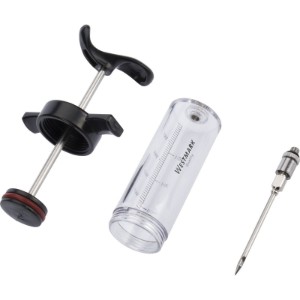
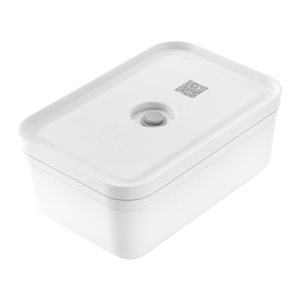
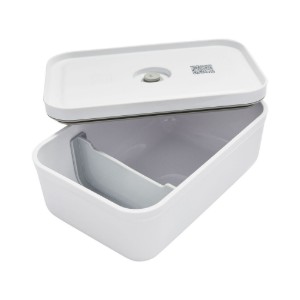
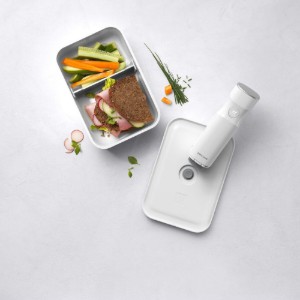
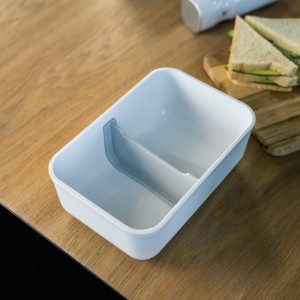
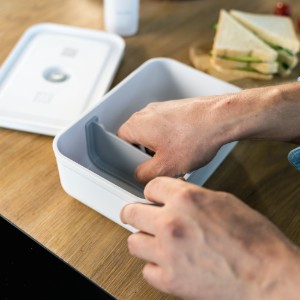
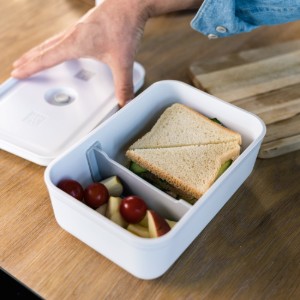
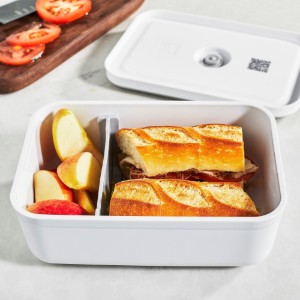
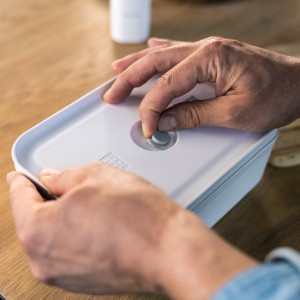
Vacuum-sealing "FRESH & SAVE" food container, 1.7 L, plastic - Zwilling
Code: 36805300