






As drinking water makes its way to our taps, it can pick up certain impurities that can affect its quality and taste. Even household appliances can be damaged by tap water if it is hard water, rich in limescale.
Besides being unsightly, limescale can cause quite costly problems if left “untreated”. Here are some negative effects:
- Home appliances will have a shorter lifespan.
- You will spend more time cleaning the bathroom, kitchen and appliances, and you will consume more cleaning and descaling products.
- Drinking glasses, cutlery and other household items can be affected by an unsightly white film.
- Hard water can have a peculiar, unpleasant, sometimes even salty taste, and affects the flavor of hot beverages like coffee and tea.
- Drinking hard water can contribute to dehydrated skin.
Read on to learn more about limescale buildup, how to remove it and, most importantly, how to prevent it.
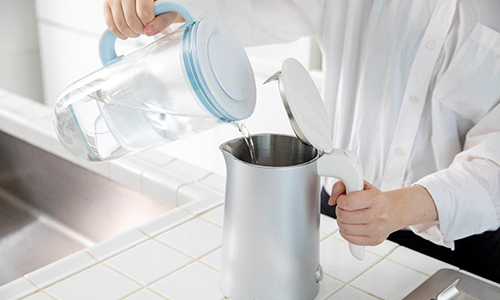
Why do limescale buildup forms on household appliances?
Limestone is a natural rock made up mostly of calcium carbonate. Limestone forms when water rich in calcium carbonate - also known as hard water - is boiled. Calcium carbonate is present in our drinking water, but it remains dissolved until the water is heated.
As water in a kettle boils, certain compounds, such as carbon dioxide, evaporate. This process alters the solubility of calcium carbonate, which then accumulates inside the kettle in a thin, white film.
Limescale deposits therefore form on household appliances that use hot water, which is why you will not see limescale buildup on regular water bottles or on faucets that only dispense cold water.
Limescale is not harmful to our health, but it is harmful to household appliances.
Limescale is made up of calcium and carbon, two elements found in our bodies that are not harmful to us (that is, if we do not factor in the stress and frustration caused by its unsightly appearance and the need for regular descaling). But for kitchen appliances, limescale is a silent enemy.
If you live in a region with hard water, you've probably noticed limescale deposits on your kettle, espresso machine, iron, dishwasher, baby formula maker, and other appliances that use hot water.
How does limescale affect household appliances?
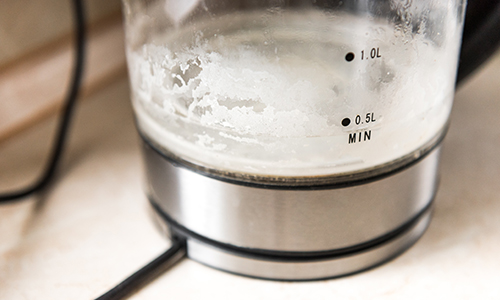
Limescale deposits can clog appliances and reduce their efficiency. In other words, a kettle or coffee maker has to use twice as much power to heat water than an appliance without limescale. Dishwashers also become less efficient.
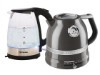
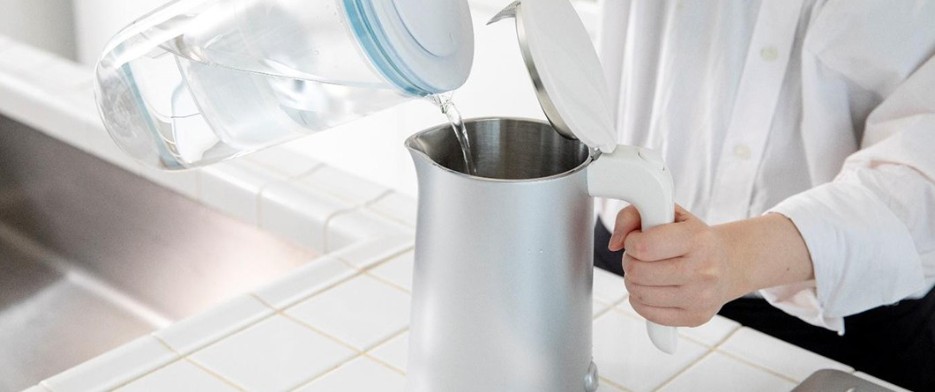
Is it evene necessary to mention the unsightly aspect? Even though limescale buildup is not actually dirt, it certainly gives the impressio that the house is not clean or well-maintained. This is especially true if you have appliances with transparent walls, such as this elegant electric kettle.
What does water hardness mean?
Water hardness is a scale that measures the concentration of minerals in water. These minerals can end up in the water if it flows through mineral deposits, such as limestone. Hard water has a high concentration of these minerals.
If you use a BRITA MAXTRA PRO filter, it is important to know that they do not filter out calcium and magnesium salts. Instead, they work by reducing carbonate hardness, so that calcium carbonate and therefore limescale, is less likely to develop.
How can you find out how hard the water is in the area where you live?
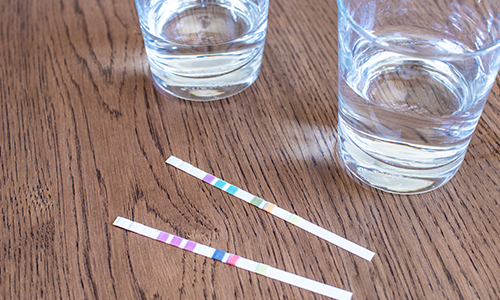
In some countries there are official maps showing water hardness by geographic area. In Romania, this is not the case, yet. What you can do is buy a water hardness test kit.
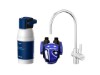
Some filtration products, such as the BRITA MyPure P1 tap water filter system, also include a water hardness test strip in the box.
If you are dealing with limescale stains on dishes and appliances, faucets and sinks, bathroom tiles and the bathtub, it means that your tap water is hard or very hard.
How does limescale affect your hot drinks?
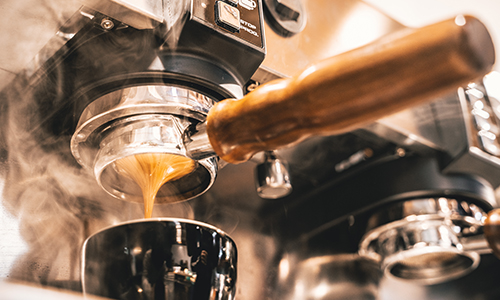
Limescale, like other substances found in tap water - such as chlorine - can affect the taste of tea and coffee.
When brewing tea or coffee, water acts as a solvent that extracts the flavors from the beans or leaves. Excessive minerals in hard water can interfere with this extraction process, resulting in inferior taste and weaker aroma.
Hard water can affect the bitter and acidic notes of tea and coffee. This can lead to a taste that is too harsh or sour, masking the delicate aromas and leaving an unpleasant aftertaste.
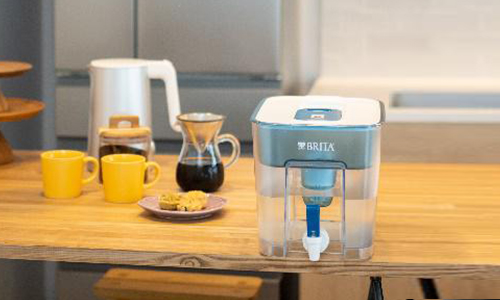
Filter water to prevent limescale buildup formation
If you're dealing with limescale buildup on your appliances, try descaling them using a mixture of 50% water and 50% vinegar (pickling vinegar works best for this). Pour the mixture into the kettle and let it sit for a few hours, then rinse.
To remove limescale deposits from faucets and other fixtures in the bathroom and kitchen, you can pour the mixture into a spray bottle. If you don't want the whole room to smell like vinegar, you can use lemon juice or a limescale-removing cleaner.
However, when it comes to limescale buildup, prevention is better than cure.
BRITA water filters are specially designed to help reduce water hardness, while leaving important minerals such as calcium and magnesium in the water.
Depending on water hardness in the region where you live, you can choose between the two MAXTRA PRO filters:
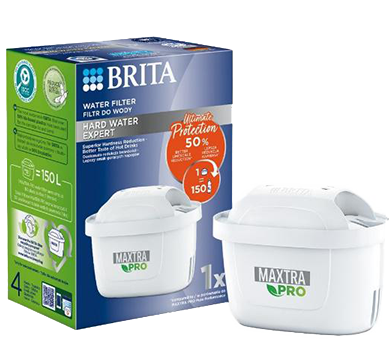
MAXTRA PRO HARD WATER EXPERT water filter
• The specialist in limescale prevention: ideal for regions with hard and very hard water.
• Reduces limescale up to 50% more effectively than the MAXTRA PRO PURE PERFORMANCE filter.
• Extends the lifespan of household appliances, such as kettles and coffee makers.
• Reduces chlorine and other chemical compounds that affect the taste of water and beverages.
• Reduces impurities and heavy metals (e.g. lead and copper) that can get into water from pipes.
• Filters up to 150 l of tap water.
• Made in Germany from 50% bioplastic material from renewable sources, which does not compete with food production.
- 100% recyclable
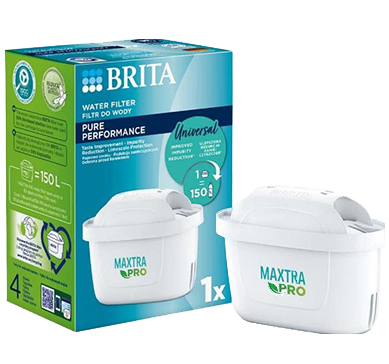
MAXTRA PRO PURE PERFORMANCE water filter
• Universal filter, ideal for hard and moderately hard water regions.
• Reduces impurities and residues of certain herbicides, pesticides and pharmaceuticals.
• Reduces limescale, chlorine and other chemical compounds that affect the taste of water and beverages.
• Reduces impurities and heavy metals (e.g. lead and copper) that can get into water from pipes.
• Filters up to 150 l of tap water.
• Made in Germany from 50% bioplastic material from renewable sources, which does not compete with food production.
- 100% recyclable
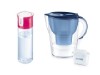
Both filters are compatible with all BRITA water filter mugs, as well as the FLOW dispenser.
If you prefer filtered water straight from the tap for drinking and cooking, a BRITA filtration system ensures great-tasting water right from the source. They easily mount on taps or under the sink and filter hundreds of liters of water with a single filter.
Learn more about filtration systems
Other recommended products:


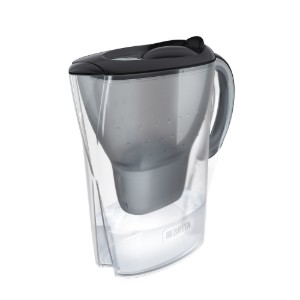
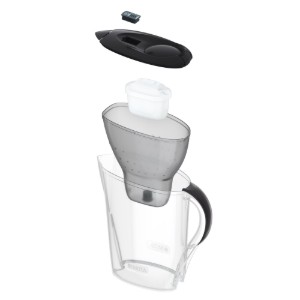
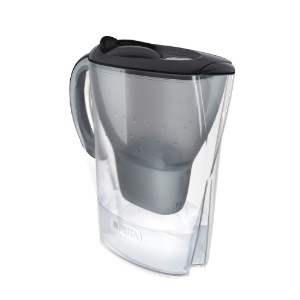
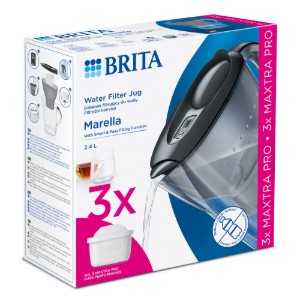
BRITA Marella 2.4L starter pack + 3 Maxtra PRO filters (grey)
Code: BR1052796